Haws No. 4 Brass-Rose Watering Can
"Continuously made in Birmingham since 1886. The brass rose produces a finer, more even shower than any plastic alternative — a meaningful difference for seedlings, freshly-disturbed soil, and the daily watering ritual."
 SPECIMEN · No. 4 Brass
 / specificationsThe numbers.
| Capacity | 9 imperial pints (5 L) |
|---|---|
| Body material | Hand-spun metal |
| Rose material | Solid brass (the defining feature) |
| Handle geometry | Refined over a century for one-handed pour |
| Warranty | Manufacturer warranty against defects |
| Made in | Birmingham, England — continuously since 1886 |
| Brand history | Haws Watering Cans is a 5th-generation family business |
Anyone who waters seedlings, plug-plants, freshly-sown beds, or container plants. Specifically: gardeners who have noticed that a plastic rose either spits in clumps or wets too aggressively, and want a tool that delivers an even fine shower.
Container-only balcony gardeners with three pots (a 1-pint Haws Practican is a better fit for limited space). Anyone watering a vegetable plot of 200+ m² where a hose is the only sane answer.
/ what we love
- Brass rose produces a noticeably finer and more even spray than plastic equivalents. This matters most for seedlings (won't flatten them) and freshly-disturbed soil (won't dislodge it).
- Handle and spout geometry has been refined across 140 years of continuous production. You can tip the can fully without straining your wrist — try this with a cheap can and feel the difference.
- 5L capacity is the sweet spot: large enough to soak a bed, small enough for one-handed use when full.
- Hand-spun construction, English-made, will outlast the gardener. Haws cans from the 1950s are still in working service.
/ what to know
- Heavier than plastic alternatives when empty — the brass rose adds real mass. Worth it for the spray quality but worth knowing.
- Premium price tier. Plastic equivalents are a small fraction of the cost.
- Brass needs occasional cleaning to prevent lime-scale buildup in the rose holes; a 30-minute soak in white vinegar twice a year handles it.
Why brass
A rose (the perforated disc on the end of a watering can spout) controls the shape of the water that hits your plants. Plastic roses are moulded; brass roses are drilled. The difference is visible: a brass rose produces a finer, more evenly-distributed shower, with droplet size closer to natural rainfall than to a garden hose.
For seedlings, freshly-pricked-out plug plants, and just-disturbed soil, this matters. A plastic-rose can will either spit in clumps (compacting soil) or wet too aggressively (flattening seedlings). A brass rose wets evenly and gently.
For watering an established lawn or a thirsty mature shrub, the difference doesn’t matter — both roses deliver water. The brass-rose premium is paid for in the careful work, not the bulk work.
Where it sits in our framework
The Haws No. 4 passes our four-question durability framework:
- Forged or stamped? Hand-spun metal construction (the watering-can equivalent of forged).
- Replaceable parts? Roses, handles, and spouts available through Haws direct.
- Real warranty? Manufacturer warranty against defects, honoured.
- Manufacturer continuity? Continuously produced in Birmingham since 1886 — 140 years.
Four yeses with a long history of honouring all four.
Buy
Check price on Amazon
As an Amazon Associate gardening.equipment earns from qualifying purchases.
Related watering gardening equipment
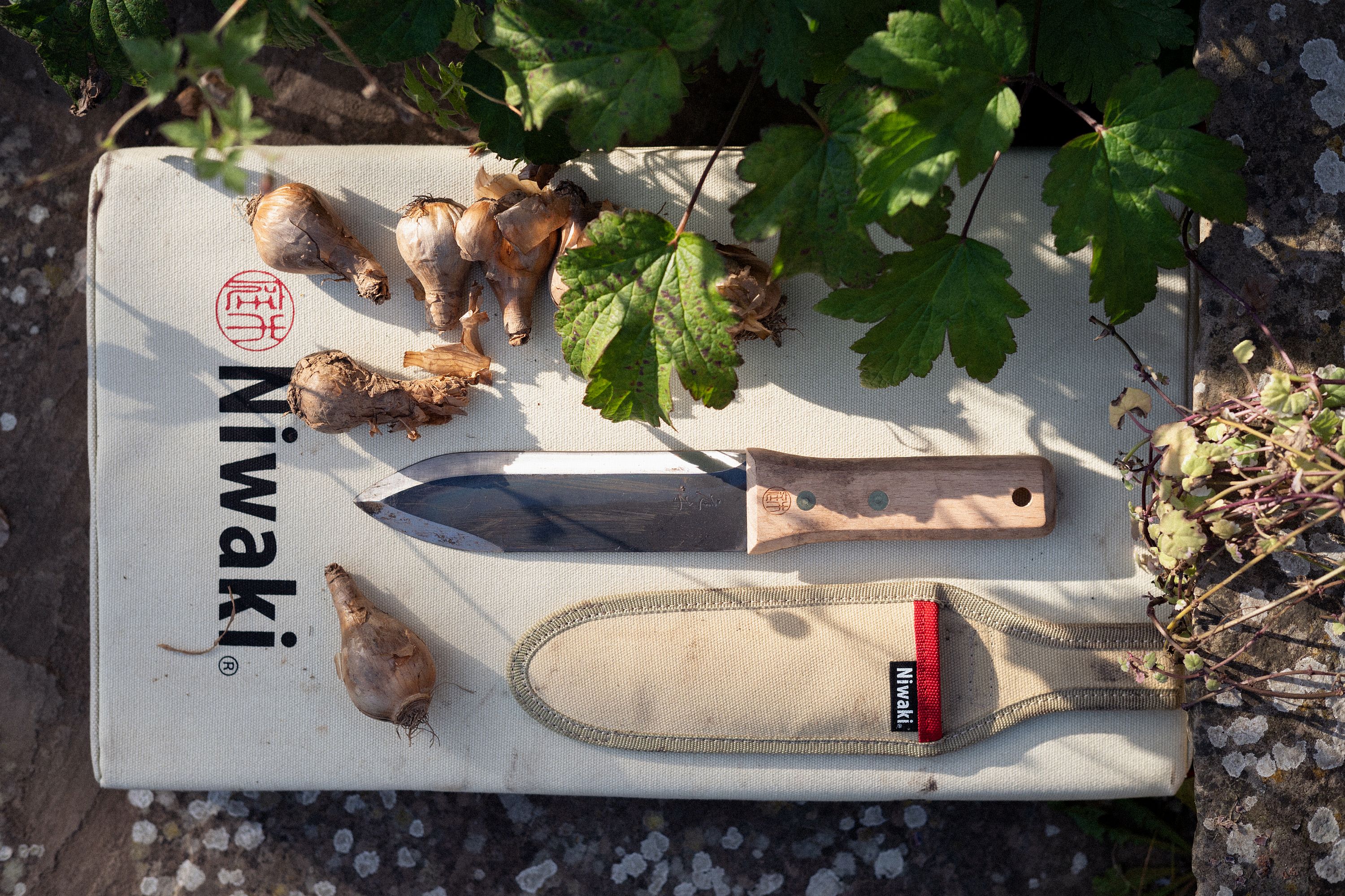
Niwaki Hori-Hori Pro
Editor's ChoiceJapanese-forged digging knife with SK-5 carbon steel blade. Replaces four tools in one. The hand-tool upgrade most gardeners didn't know they needed.

Burgon & Ball RHS-Endorsed Garden Trowel
Lifetime BuyThe RHS-endorsed garden trowel from Sheffield maker Burgon & Ball — continuously producing garden tools since 1730. Stainless head, hardwood handle, lifetime warranty.