/ The Almanac · Issue Nº 12 · May 2026
May
Gardening Equipment for May.
Last frost behind us. First tomatoes hardening off. Roses in first flush. Lawns at full vigour.
The last frost is behind us in most temperate gardens; the first tomatoes are out; the roses are doing their first real flush. May rewards a gardener who has the right gardening equipment in hand, and punishes one who tries to do May's work with March's tools.

/ To plant
What to plant in May.
May is the planting month — last frost behind, soil warmed to 13°C+, and enough light to make seedlings happy. Get the slow-growing summer crops in this fortnight if you want a harvest before August.
- Tomatoes, peppers, aubergines — into open ground, hardened off for at least a week
- French and runner beans — direct sow once soil is reliably 12°C+
- Courgettes, cucumbers, squashes — out under cloches first half of May, uncovered after the 15th
- Sweetcorn — direct sow in blocks of nine plants for pollination
- Salad leaves — succession sow every fortnight from now until September
- Dahlias — tubers out, stake at planting time (you'll thank yourself in August)
- Half-hardy annuals (cosmos, zinnia, nicotiana) — direct sow or plug-plant out
/ To prune
What to prune in May.
Spring-flowering shrubs that have finished their flush get pruned NOW, not in autumn — they flower on next year's wood, and the longer you wait, the less time the new wood has to mature.
- Forsythia — hard cut back of all flowered stems to a third of length
- Flowering currant — light shape, remove the oldest stems at base
- Spirea (early flowering) — same as forsythia, do not wait
- Apple cordons — pinch out summer growth back to five leaves on side shoots
- Wisteria — second summer prune, side shoots to six leaves
- Roses — light deadhead after first flush, encourages a second showing in late June
- Box and yew hedges — first shape of the year, second in late July
/ Equipment to reach for
What to use in May.
If your secateurs are dull, your trowel bent, your hori-hori still on your wishlist — May is the deadline. Equipment bought now sees its full first season; equipment bought in July is half-wasted. The three picks below cover the most common May gaps in a home garden's working library.

Felco F-2 Bypass Pruner
Editor's ChoiceThe seventy-five-year benchmark for bypass pruners. Forged construction, every part replaceable, lifetime warranty — the reference every other pruner is measured against.
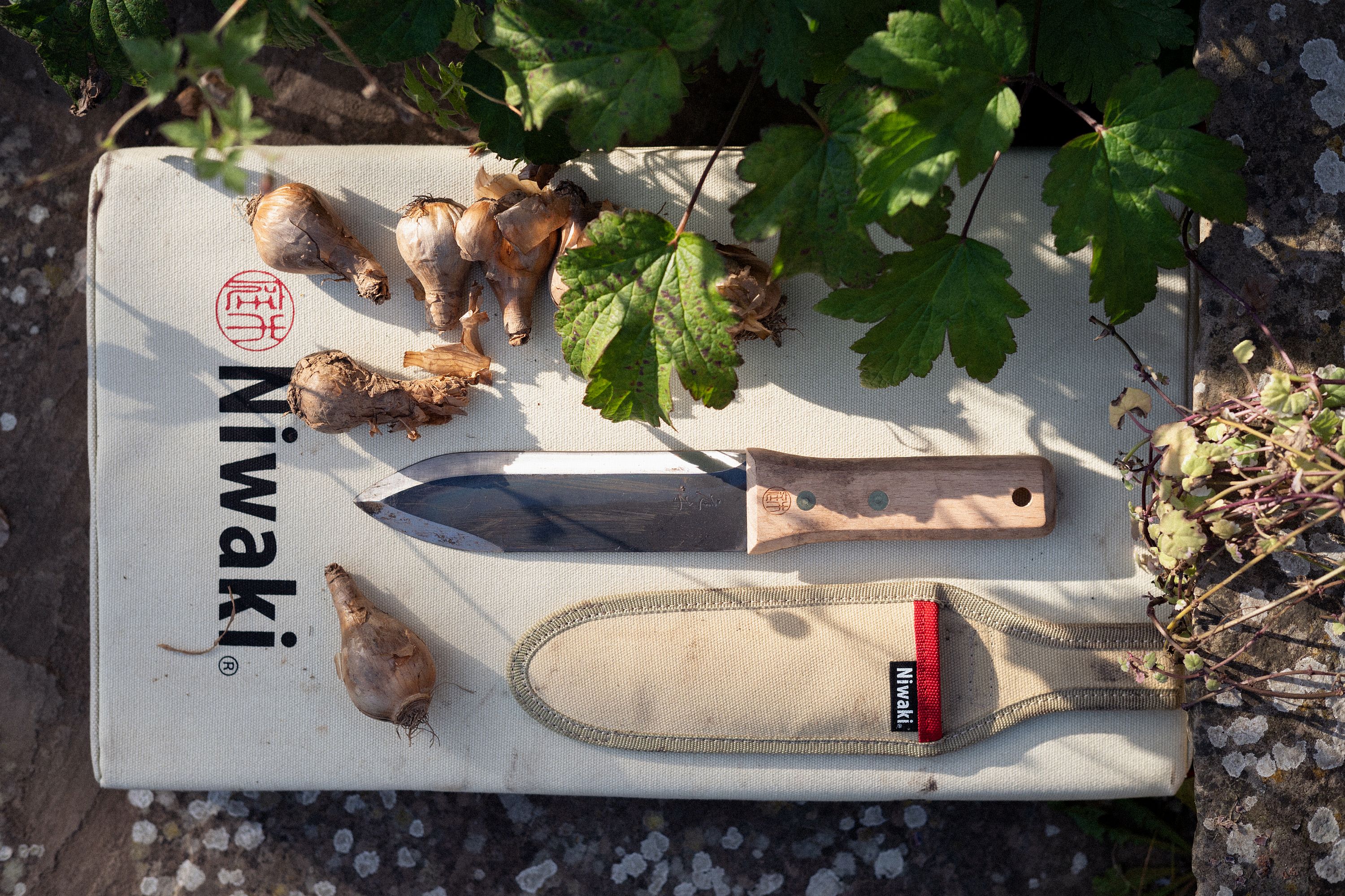
Niwaki Hori-Hori Pro
Editor's ChoiceJapanese-forged digging knife with SK-5 carbon steel blade. Replaces four tools in one. The hand-tool upgrade most gardeners didn't know they needed.

Bahco PXR-M2 Ergonomic Rotating-Handle Pruner
Best ProProfessional rotating-handle bypass pruner, French-forged at the Pradines factory. The ergonomic pick for anyone who prunes long enough to feel it in the wrist the next morning.
/ Maintenance
What to do this month.
May is the cheap-insurance month for tool maintenance. Twenty minutes of sharpening and oiling now will carry your whole working library through the summer's heavy use, and avoid the August moment of grief when the loppers fail on a 25 mm Cornus stem.
- Sharpen pruners, secateurs, and shears — eight to ten strokes with the Felco 903, 20° bevel
- Wipe and re-oil every Japanese carbon-steel tool (Niwaki Hori-Hori, Mainichi range) with camellia oil
- Check spade and fork ferrules for play — re-wedge handles if loose
- Empty winter water from the metal watering cans (lime build-up reduces flow)
- Charge battery tools to 80% and run them for five minutes to refresh the cells
- Inspect the shed wall rack — re-tighten any loose mounts before the heavy autumn equipment goes back
- Order replacement parts you know you'll need by August (pruner springs at a couple of pounds each, mower blade kits)
What May asks of a garden
May is the busiest month of the gardening year and the most rewarding. Last frost is behind us; soil temperatures are reliably above 13°C; the days are long enough that seedlings do not stall; the cool nights have not yet been replaced by August’s exhausting humidity. Every plant in the garden has something to do, and so does every gardener.
The honest May calendar runs to about thirty hours of garden work for a medium-sized home plot. Most of that thirty hours is planting, the rest is pruning, the maintenance routines are short. The single most consequential variable on whether those hours are a pleasure or a chore is the state of the gardening equipment in the shed.
The May tool, briefly
If you only have time to think about one piece of gardening equipment this month, make it your bypass pruner. May is when the rose pruning, fruit thinning, and spring shrub work all converge — and a dull pruner crushes more than it cuts, which damages the plant and stretches the work.
Sharpen it (eight strokes per side with a Felco 903, 20° bevel), oil the pivot, and you’re set for the season. If you don’t yet own a real pruner — this is the month to buy one. See our Felco F-2 review for the reference pick.
The May garden, in five lines
- Get tomatoes in. Hardened off, in the first fortnight, staked at planting.
- Hard-prune spring shrubs that have finished flowering. Forsythia, flowering currant, early spirea — now, not autumn.
- Direct sow beans, courgettes, sweetcorn. Soil is warm enough; light is plenty.
- First mow at a higher cut. Lawns are at full vigour; cut at 35–40 mm, not the August short setting.
- Sharpen everything. Twenty minutes saves a season.
The honest summary
May rewards preparation more than any other month. The gardeners who get the most from May are the ones who did their sharpening in April and their seed ordering in February. If you’re reading this and your pruners are dull, your trowel is bent, and you do not own a hori-hori — fix all three this weekend. The compound interest of well-maintained gardening equipment is largest in the busiest month.
The next Almanac — June 2026 — lands the first week of June, covering the hardening-off finish, the first soft fruit harvests, and the early summer pest watch. Subscribe to the seasonal Almanac to get it in your inbox the day it publishes.
Sharpen — or replace — your pruner
As an Amazon Associate gardening.equipment earns from qualifying purchases.